
Map Erie City Directory Collections
Historical-directory research begins with a coverage check. The Town crosses Boulder County and Weld County, and Erie did not consistently have a standalone phonebook. A catalog record is not proof that every Erie household appears in a volume. The collections below separate a verified item, a living index, surviving newspaper issues, and local access points.
| Collection | Years or Scope | Where Held | Access |
|---|---|---|---|
| Telephone Subscribers Directory | 1902 | Carnegie digital collection, BHS 328-O-2 | Free catalog and scan route; page text and abbreviation key need image review |
| Colorado Directories Index | Municipality, county, and year compilation; updated quarterly | Denver Public Library Western History | Free living PDF; search `*Erie` and neighboring municipalities |
| Boulder City Directory index | 1901-1903 | Carnegie, Ella M. Travis, call 997-2-2 | Free catalog index; adjacent-city context, not proof of Erie coverage |
| Erie-Canfield Independent | 1884-1893 surviving digital issues | Carnegie, Sarah Wise Collection #761 | Free catalog; 17 surviving issues, not a complete run |
| Erie Historical Society newspapers | 1884-1896, 1900-1915, 1930-1951, and 1977-1980 runs as listed | Erie Historical Society and History of Colorado projects | Run guide, microfilm or digital confirmation, and museum contact |
| Colorado Historic Newspapers Collection | State collection; title and year vary | Colorado State Library and partners | Free search entry point; query exact Erie title and year |
| Erie Community Library and HPLD | Current branch, databases, and courier access | Erie Community Library | Public library route; exact printed directory and obituary shelf years not published |
| Archives and FamilySearch collections | Marriage, census, naturalization, divorce, probate, and county groups vary | Colorado State Archives and FamilySearch | Free search or account route; images and access vary by collection |
The verified Erie directory artifact is the 1902 regional telephone item. The Denver Public Library index is the responsible way to look for other years, but the accessible research did not expose an exhaustive Erie run or publisher list. Do not turn the absence of a catalog entry into a claim that a year was never printed. Record the title, year, place label, call number, page, and access point for every hit.
Note: Erie directory coverage is a patchwork of regional books, newspapers, archives, and library referrals rather than one complete annual series.
Read an Erie City Directory Entry
A historical entry must be read as a dated source. The 1902 Carnegie catalog confirms an alphabetical list of names and telephone numbers, but the accessible metadata does not expose a scanned subscriber page or abbreviation key. Later directory conventions can add address, occupation or trade, spouse or widow notation, and a street-order section. Those details must be transcribed from the actual volume rather than supplied from memory.
| Name | Start with the printed surname and given name or initials. Preserve married, widow, and spelling variants as separate evidence. |
|---|---|
| Telephone line | The 1902 catalog specifically describes names and telephone numbers. Confirm the number and any label on the scanned page. |
| Address | Record the house number and street exactly as printed when a directory page supplies them. Do not assume a later postal label is the same. |
| Occupation or trade | Some historical directories print a trade or occupation beside a name. Treat it as a period clue, not proof of a current affiliation. |
| Household notation | Parentheses, widow forms, spouse names, or a householder mark can connect people, but the abbreviation key must be checked first. |
| Source citation | Keep title, year, municipality label, page, call number, catalog URL, and image status together. |
- Criss-cross directory
- The street-order half of a historical directory. It starts with a street and number, then gives the name or household clue. No complete Erie run was verified.
- Householder index
- A name index centered on a household head or principal entry. It is an access key, not a full list of everyone in the home.
- Abbreviation key
- The volume's explanation of short forms and symbols. Photograph or transcribe it before reading a mark as an address, household, or trade detail.
The 1902 Erie Directory Artifact
The strongest verified early directory clue is Carnegie's catalog item titled Telephone subscribers directory, a regional book rather than a town-only volume. It is dated 1902, carries call number BHS 328-O-2, and covers Boulder, Broomfield, Eldora, Erie, Lafayette, Longmont, Louisville, Lyons, Wallstreet, and Ward. The catalog says Broomfield has five customers and describes an alphabetical list of names and telephone numbers. The publisher or telephone company is not identified in the accessible metadata.
The Carnegie catalog record for the 1902 directory is the source to open before quoting a subscriber.
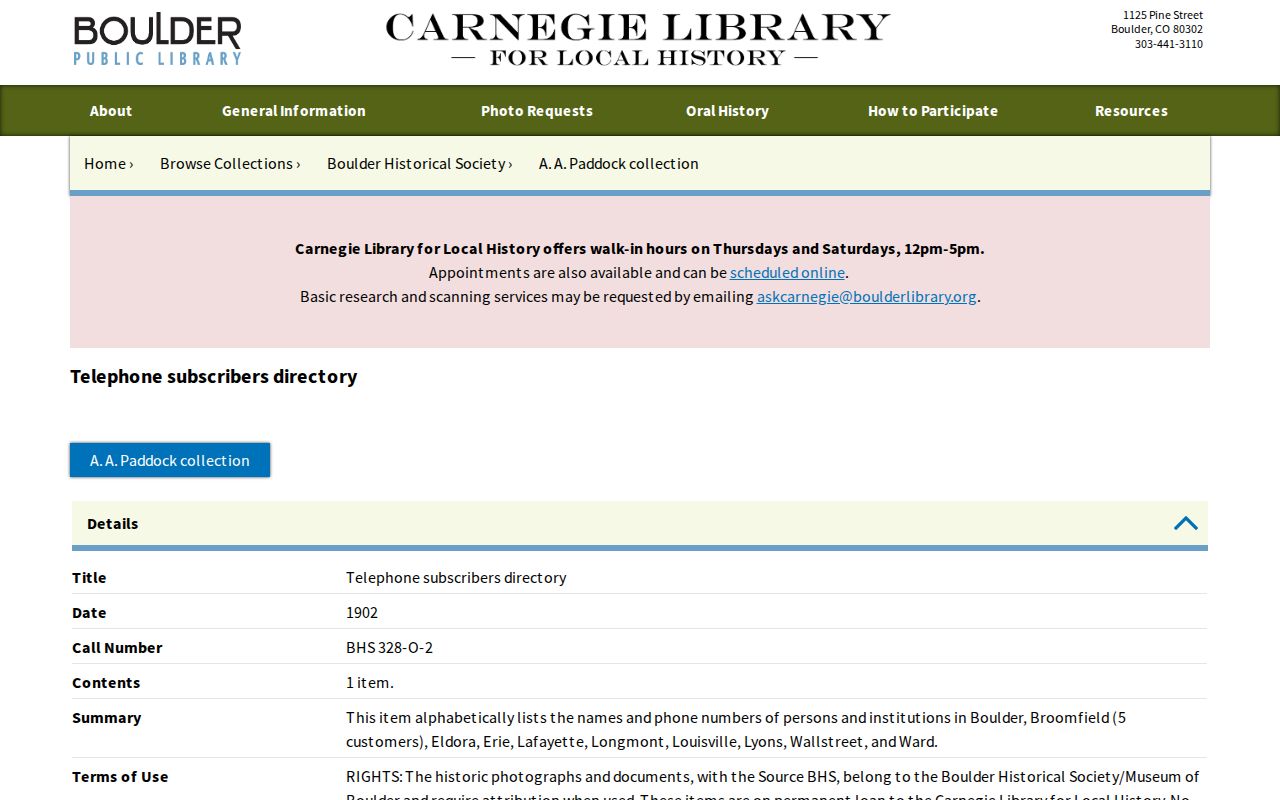
The catalog image confirms where to begin, not a particular name or number. The scanned page and abbreviation key were not exposed in the text capture, so a researcher should inspect the scan before assigning an address, household, or line label to an Erie person.
That limitation is useful. A 1902 phone entry is contemporaneous contact evidence. Compare it with the 1900 or 1910 census, a deed, a newspaper notice, or a cemetery record before calling it proof of ownership or a complete household.
Why Erie City Directories Move Towns
Erie often appears in Longmont, Boulder, or Denver books because it was not consistently large enough to sustain a standalone phonebook. The Denver Public Library Colorado Directories Index is a living index and is updated quarterly. Search `*Erie`, then check the neighboring municipality and county labels for the same surname, street, or year.
The Carnegie Boulder City Directory index for 1901-1903, Ella M. Travis, call 997-2-2, demonstrates the adjacent-city method. It does not prove that every Erie resident appears in a Boulder volume. Preserve the book's own municipality label, since a person may be listed in a Longmont book one year and a Boulder or Denver book another year.
This regional quirk is not a search failure. It is a geography clue. A query that uses only “Erie” can undercount names, while a search that follows `*Erie`, Longmont, Boulder, Denver, and the county label can expose the relevant shelf or PDF entry.
Erie Newspaper Clues for City Directories
Newspapers supply the social layer around a historical volume. The Erie Historical Society newspaper run guide identifies Erie-Canfield Independent from 1884-1894, Erie Independent from 1894-1896, Erie Review from 1900-1902, Erie News from 1903-1905, Western Mirror from 1904-1908, Erie Herald from 1908-1915, later Erie News and Erie Herald runs through mid-century, and Erie Echo from 1977-1980. The Society's museum and collection contact is 11611 Jasper Road, Erie, 303-828-4568, info@eriehistoricalsociety.org.
Carnegie's digitized Erie-Canfield folder is smaller than that run. It contains 17 surviving issues dated between April 17, 1884 and September 1, 1893, including selected issues from 1885, 1886, 1890, 1892, and 1893. Those issues can carry death notices, marriages, school and civic news, business names, mine or railroad context, and moves. They are incomplete, so a missing notice is not proof that an event did not occur.
Search a newspaper name beside a directory address, then corroborate it with the cemetery, deed, vital, or court custodian. The Colorado Historic Newspapers search can be a free starting point, but exact Erie title and year coverage still needs to be checked against the Historical Society's run list.
- 1871: Erie is platted and the railroad spur arrives, creating early place and movement records.
- 1874: Erie incorporates, fixing a civic date for newspaper and directory searches.
- 1884: Erie-Canfield Independent begins, with selected surviving issues now digitized.
- 1902: Carnegie catalogs the regional Telephone Subscribers Directory with Erie included.
- 1977-1980: Erie Echo appears in the Historical Society run list.
Carnegie and Erie City Directory Access
Carnegie Library for Local History holds Boulder-region newspapers, directories, photographs, manuscripts, the 1902 regional directory, and the Erie-Canfield scans. Its local-history contact is 1125 Pine St., Boulder, 303-441-3110, askcarnegie@boulderlibrary.org. Walk-in research is listed for Thursdays and Saturdays from noon to 5, with appointments and basic research or scanning help available by email.
The Carnegie local-history catalog and reading room provide a route for a directory volume that is indexed but not fully transcribed.
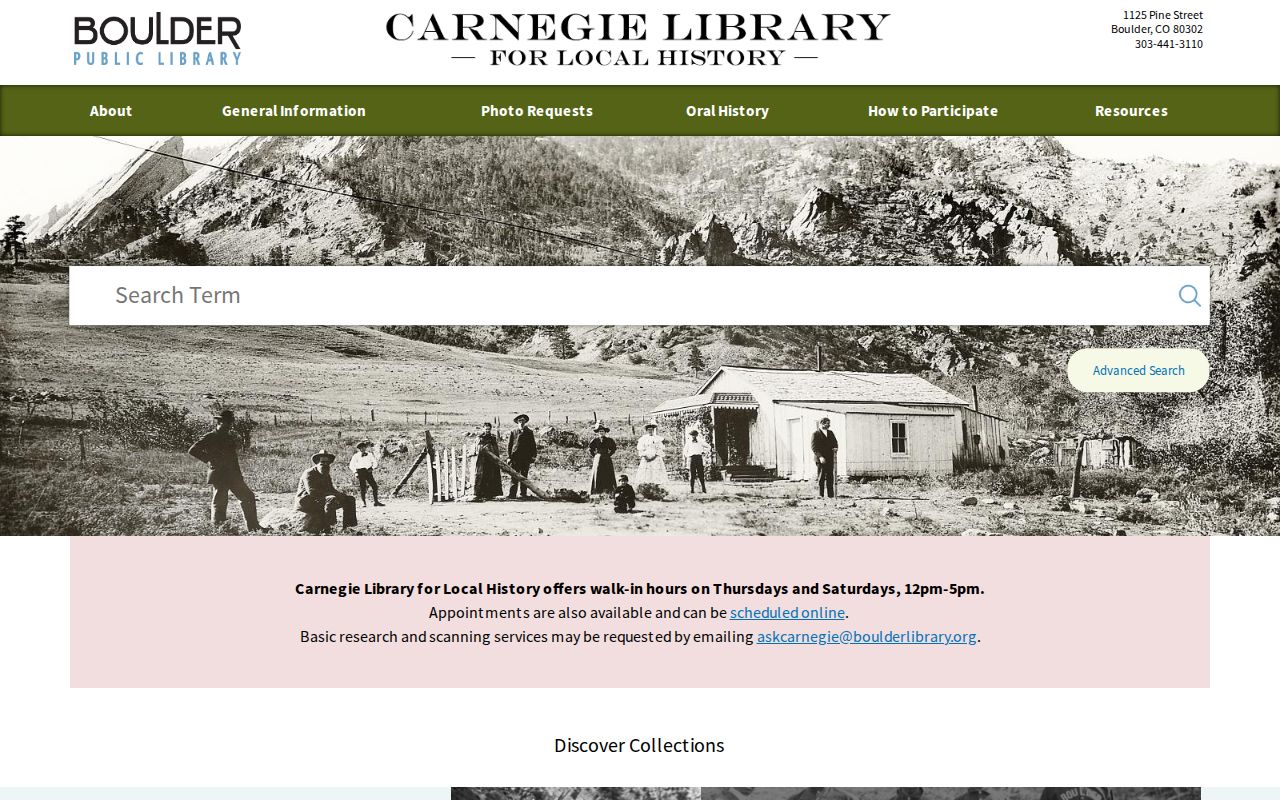
The image points to the regional shelf and digital collection context. Ask for the call number and the abbreviation key instead of assuming that a catalog summary contains every field printed in the volume.
Erie Community Library is the local High Plains Library District branch. It opened January 12, 2008, and its page describes nearly 60,000 items, Wi-Fi, courier service, meeting and study space, and online databases. Genealogy resources route through the system and LINC. The branch page does not publish exact Erie directory, obituary, or yearbook shelf years.
The Erie branch page is the practical local access point for staff referrals, databases, and a request to check current holdings.
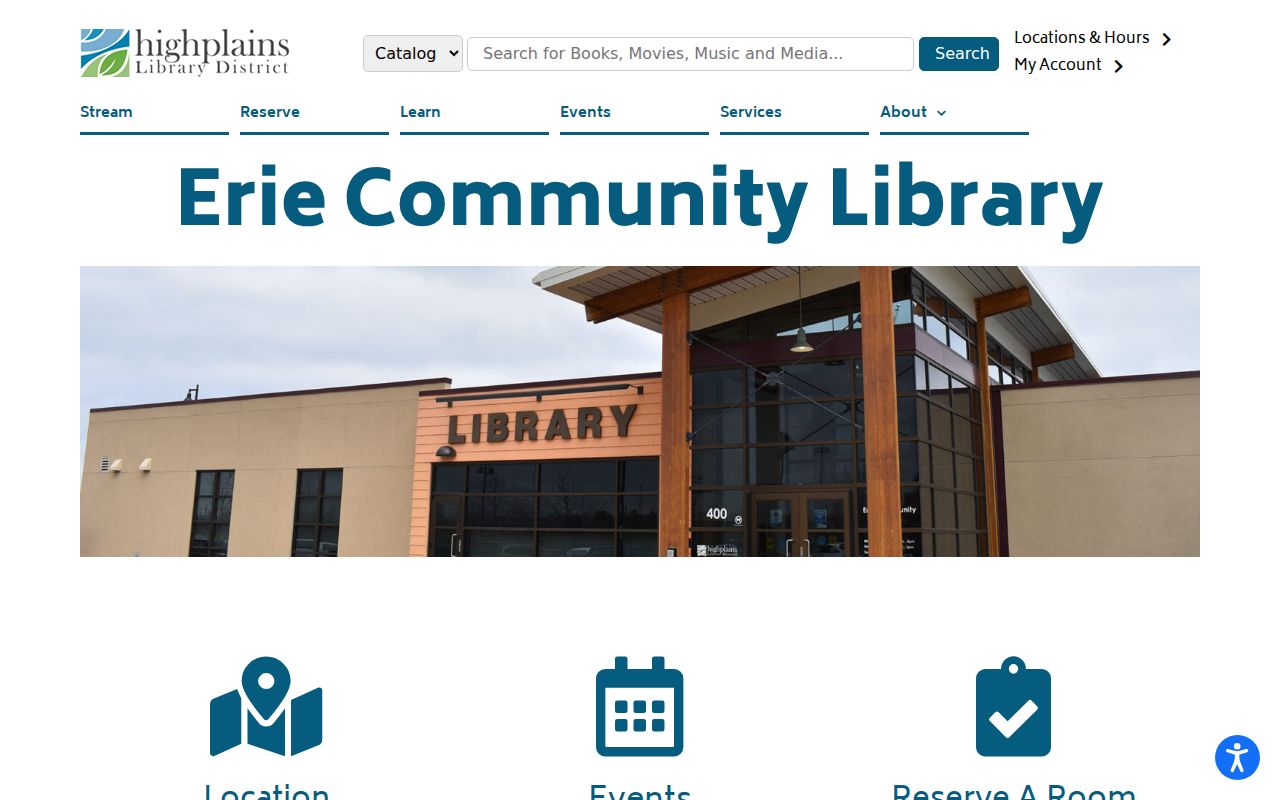
Library staff can identify the current shelf or database route, but an unpublished shelf run should remain a research gap until the library confirms it.
Trace an Erie Household Through Years
Use each volume as a sequence, not as a single answer. Start with the earliest plausible surname and municipality label, then retain the exact address, page, and source for every year. Pairing a directory with the federal census helps separate a changed address from a changed household.
- Search the DPL index for `*Erie`, then check Longmont, Boulder, Denver, and county listings for the same name.
- Normalize only in your notes. Keep initials, middle names, married or widow forms, spelling variants, and the original printed form.
- Read the street-order or criss-cross section when a volume supplies one. It can connect a street number to a name, but no complete Erie reverse run was verified.
- Pair 1900 directory evidence with the 1900 Census, the 1902 regional book with the 1910 Census, and later directory years with the 1920, 1930, 1940, or 1950 schedules.
- Close the trail with an Erie newspaper notice, cemetery search, deed, probate file, or eligible vital-record request.
A disappearing entry can mean a move, death, unlisted household, a changed municipality label, or a missing volume. A deed can show a transfer, a newspaper can show a move or death, and Mount Pleasant can supply a burial clue, but none should be substituted for the others. When a historical name needs a present-day identity check, use the Erie resident lookup workflow and keep the historical source separate from the current match.
Note: Census boundaries can follow a township or precinct rather than the modern Town of Erie, so compare the source geography before joining households.
Mount Pleasant Closes Historical Trails
Mount Pleasant Cemetery history adds a local record-keeping story. The oldest headstone is from 1869, while the first cemetery deeds date to 1901 and refer to “Erie Cemetery.” The Town estimates roughly 1,300 burials and more than 300 unmarked graves. Almost no pre-1901 interment record survives apart from intact stones. Historic files include about 200 burial transit permits, more than 100 without a burial location, and only incomplete interment records beginning in the 1960s. Cemetery software was purchased in 2009.
The Town cemetery search can locate current burial information, but an absent result is not proof that a historical Erie resident was never buried there. Compare a headstone, deed, transit permit, newspaper notice, probate clue, and death-record route as separate evidence classes.
Historical caution. A directory entry, newspaper notice, cemetery stone, and official certificate each have a different date and custodian. Preserve the source type before combining them.
What Erie City Directories Cannot Prove
A historical volume is a dated contact or household clue. It may omit a person, use a nickname, place Erie in a neighboring book, or stop before a move. The 1902 catalog does not expose a complete page transcription, and the DPL index does not promise a scan of every annual volume. A name in a book is not proof of current residence, ownership, family relationship, or a complete list of people at an address.
Use a directory to choose the next record. Search a deed by legal description, a census by year and enumeration geography, a newspaper by exact title and date, or a vital and court custodian when eligibility allows. Keep the catalog citation, image status, and any research gap visible in the notes. That restraint is what makes an Erie directory useful for family history without overstating what a historical page contains.